
San Marcos City Council denies rezoning for data center project
In a 5-2 vote, San Marcos City Council denied rezoning for a near 200-acre proposed data center on Francis Harris Lane, on Tuesday. The meeting was eight hours long with the vote being made around 2 a.m.
The majority of public comments urged the council to deny rezoning out of concern for the impacts the data center may have on agricultural land, water resources and the electricity grid. Those in favor of the data center were representatives of the Laborers’ International Union of North America (LiUNA) Local 1095 that spoke of job opportunities the data center could offer.
Since it was denied, the property owner is required to wait six months to file another rezoning application.
The site includes a 125.91 acreage tract that is within city limits and a 63.68 acreage tract, acquired from Donald and Germaine Tuff, that falls outside city limits in the extraterritorial jurisdiction.
This is the second time the rezoning application has been turned down by the city. The Planning and Zoning Commission recommended the rezoning in a 6-2 vote at the Jan. 13 meeting, bringing it back to council.
Two items were up for vote:
- Consider amending the Preferred Scenario Map of the City of San Marcos to change land use of the site from Conservation/Cluster to Commercial/Employment Low
- Consider rezoning of the site from Character District 2.5 to Light Industrial District
Council member Amanda Rodriguez deadlocked her vote to deny prior to the meeting. Rodriguez expressed frustration often holding her head in her hands saying she didn’t want to keep people waiting after a year-long discussion about the data center.
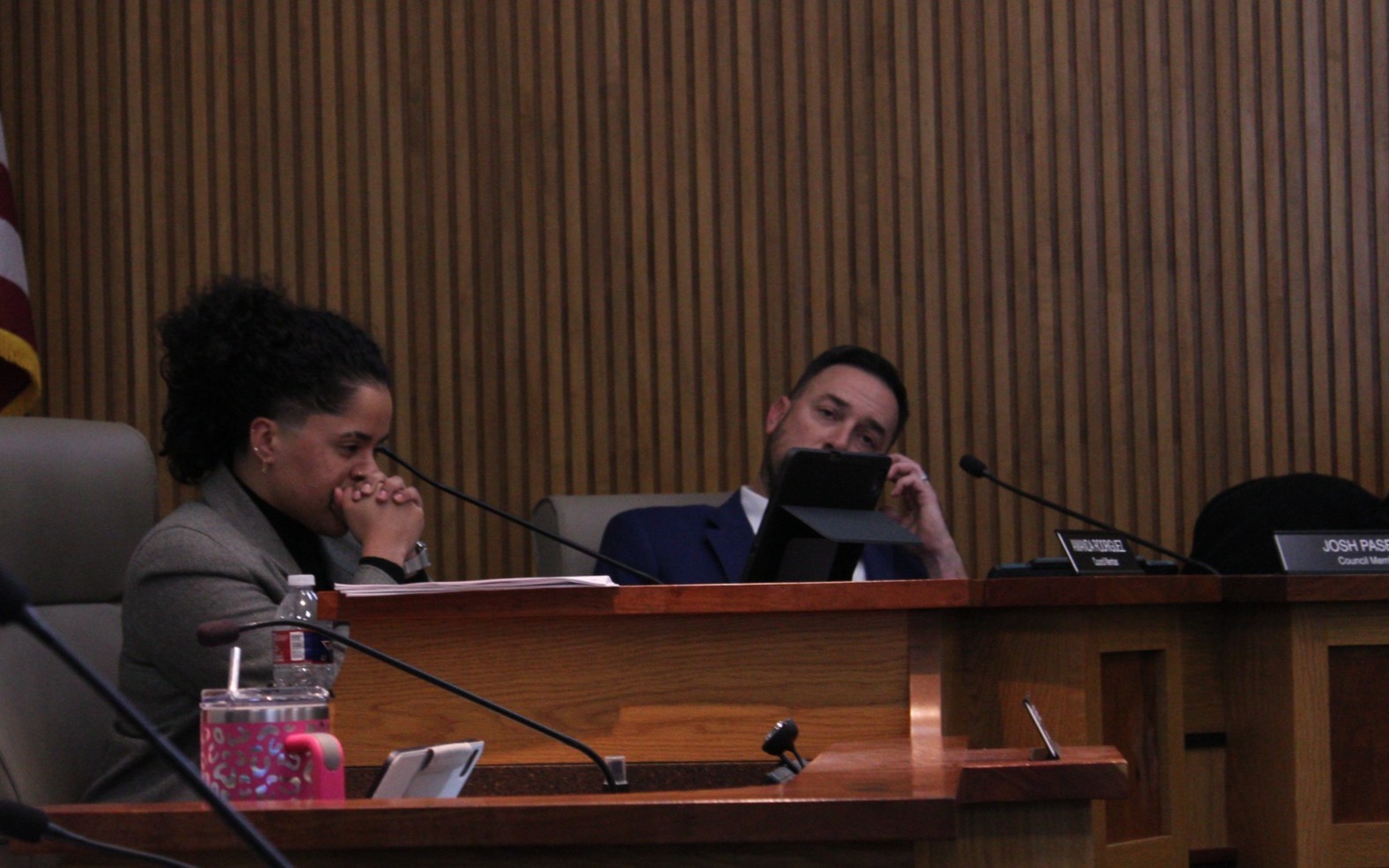
“It has been months now, it has been nearly a year. If your decision was not made the following times, I don’t understand how this time differs,” Rodriguez said. “We have had more than ample time to ask our questions and receive sufficient answers.”
Mayor Jane Hughson expressed new concerns about the water required for power generation as well as raising questions about the implications of Senate Bill 6 passed in the 2025 legislative session. The bill opened the door to new regulations for large-load industrial projects (75 Megawatts) demand on the grid and gave the Public Utility Commission of Texas more oversight capabilities.
“But it’s the water from the power generation. That’s a huge question and there’s a lot that is really complex,” she said. “That’s something that y’all brought up lately, it’s something to be considered, but it’s not something that I have found the answers that I’m looking for.”
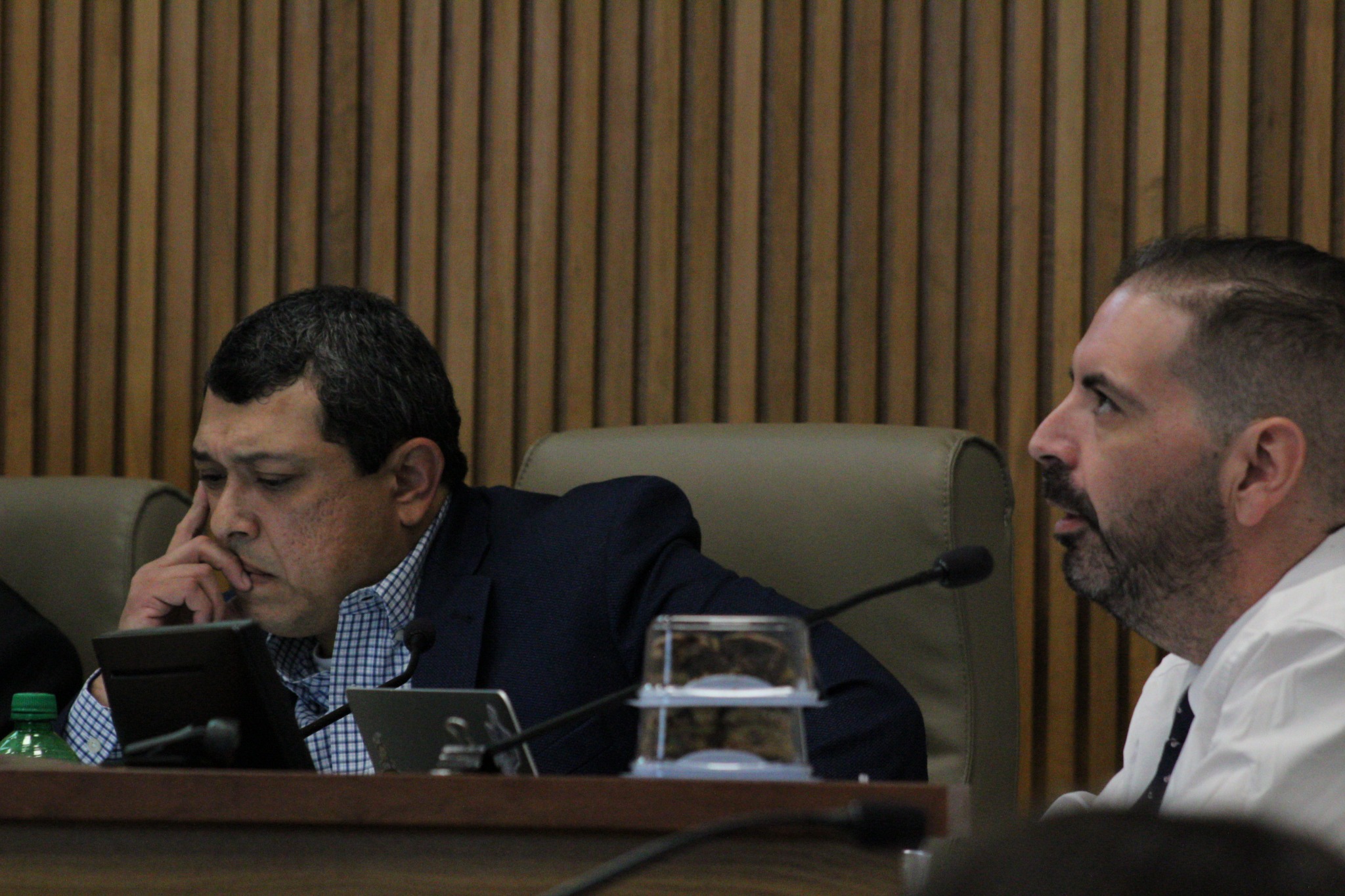
CM Lorenzo Gonzalez motioned to postpone the vote to the March 31 meeting to acquire more information about water and power demand. CM Shane Scott seconded the motion and it failed in a 3-4 vote.
Local residents and neighbors packed city hall with overflow going onto the front lawn. Many listened to the meeting through speakers, danced and held signs facing E. Hopkins St. protesting the data center. 125 people signed up to speak in public comment starting the meeting, and around 40 people spoke in the public hearing.
The property owner, John Maberry, spoke about the jobs the project could offer, the tax revenue the city could accumulate, and the restrictive covenant that would cap water use at 75,000 gallons per day, require limited noise levels and reduce stormwater runoff by 10%.
“They [data centers] are located in over 300 jurisdictions both red and blue quietly operating, paying taxes and supporting modern infrastructure,” he said.
“What has happened in those 300 jurisdictions is a result of the presence of data centers. City councils, county officials, and school boards are lowering taxes.”
Mario Jimenez, a resident who lives on Francis Harris Lane, urged council to think about the proximity of agricultural land and cattle.
“My daughter’s herd cannot thrive next to a radiator that never turns off,” he said. “Science tells us that hotter air pulls more moisture from the soil. By raising the local temperature you are actively drying out our grazing land.”
Matthew Gonzales, business manager for LiUNA, spoke about long-term jobs the data center could open up for blue collar workers.
“You have the opportunity to vote in favor of this data center, to generate revenue, to create good quality jobs on a construction project like this that could last up to five years,” Gonzales said.
Torrie Martin, an immediate neighbor to the project site, said that the jobs created from the data center are not worth the cost.
“I’m sorry you were asked to be here because you want a part-time, temporary job on a data center, but I think that’s pretty small compared to what the cost is,” Martin said. “Destroying generations of families lands that our fathers.. have worked for.”
After the final vote was made Epiphany Hodge, a local resident, said she believed the collective effort of the community sent a message that the unique water resources, like the San Marcos River, are what matters most to residents.
“The people gathering here to raise their voices…and feel the healing medicine and the sacredness of this body of water that we love so much…it was hope for the soul.”
Many erupted from the chamber and lobby hugging one another, tearing up, and collectively claimed that this was a win for San Marcos.
Post a comment